
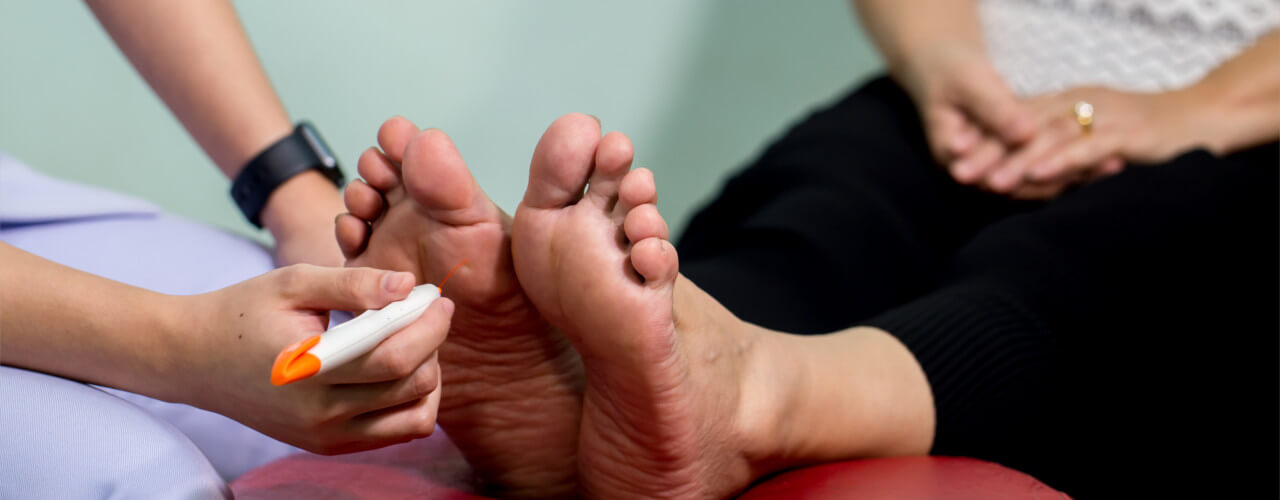

What is Diabetic Neuropathy
Diabetic neuropathy is a type of nerve damage that can occur if you have diabetes. This condition most often damages the nerves in the feet and legs due to high blood sugar levels.
Depending which nerves have been affected, the symptoms of diabetic neuropathy can range from mild to severe pain and numbness in the legs and feet to problems with digestion, urinary tract infections, and/or blood vessel and heart complications.
Peninsula Physical Therapy & Associates, Inc. in Hampton, VA offers treatment, such as Anodyne Therapy, for patients struggling with the painful effects of this condition, as well as to diabetic patients who are trying to prevent this condition from happening to them. To learn more about how Physical Therapy can slow down the progression of diabetic neuropathy, contact our office today.
How To Know if You Have Diabetic Neuropathy
There are many symptoms that can show up with this condition, but everyone is different. There are also four different kinds of diabetic neuropathy as well.
Each type includes different symptoms, and you can have more than one type at the same time. Some people might experience many symptoms, and some may not experience any at all.
1. Peripheral neuropathy
- Sharp pains or cramps
- Numbness or reduced ability to feel pain or temperature changes
- Tingling/burning feelings
- Increased sensitivity to touch – some people may experience pain or irritation from clothing touching their skin
- Ulcers, infections, and bone and joint pain of the feet.
2. Autonomic neuropathy
- Decreased sexual response levels
- Unawareness of low blood sugar levels
- Problems going to the bathroom
- Slow stomach emptying (gastroparesis), which can result in causing nausea, vomiting or lack of appetite
- Trouble with how quickly your eyes adjust from light to dark
3. Proximal neuropathy
- Affects nerves in thighs, hips, buttocks
- Shrinking thigh muscles
- Difficulty getting up from sitting
- Severe stomach pain
4. Focal neuropathy (cranial or peripheral)
- Double vision
- Aching behind one eye
- Bell’s palsy
- Numbness or tingling in your hand or fingers
- Weakness in your hands
If you experience any of these symptoms, it’s important to see a healthcare professional to get your condition assessed. The physical therapists at Peninsula Physical Therapy & Associates, Inc. are skilled movement specialists who can help manage or relieve your pain symptoms caused by diabetic neuropathy.
How Can Physical Therapy Help Diabetic Neuropathy
Diabetic neuropathy is a serious issue that affects at least half of the diabetic community, however, this painful condition can often be prevented or slowed down by proper maintenance of blood sugar levels and having a healthy lifestyle.
Physical Therapy can help a patient gain back lost motion, as well as improve their walking abilities and balance. The therapists at Peninsula Physical Therapy offer personalized treatment care plans for patients with this condition, which may include Anodyne Therapy
At your first appointment, your therapist in Hampton, VA will do a comprehensive analysis of your condition and assess your pain symptoms. From there, they’ll be able to prescribe the best exercises, stretches, or lifestyle changes that can improve your condition.
The goal of treatment for diabetic neuropathy at Peninsula Physical Therapy & Associates, Inc. is maintaining and improving your range of motion, as well as strengthening your muscles. Your therapist might teach you how to get up from a sitting position without losing your balance. They may also include Anodyne Therapy, gait training as well and exercises to help you regain your feeling in your hands and feet. Our trained physical therapists are dedicated to helping you achieve a pain-free life.
Contact Our Clinic Today
If you or a loved one is struggling with diabetic neuropathy and searching for relief, look no further. Contact or schedule an appointment today at Peninsula Physical Therapy & Associates, Inc. today to learn more about our pain management and rehabilitation services.
Your Next Steps…
Request An Appointment
Receive A Custom Treatment Plan
Work Hard and Progress In Your Recovery
Recover & Enjoy Life Pain-Free!